
- Before we dive into this topic, I want to give a shoutout to our trusted partners, WISE.
If you’re interested in buying a home in Japan, download WISE now. There’s no reason not to. Honestly, even if you’re just a frequent traveler, download WISE.
It’s an amazing app that lets you seamlessly exchange your USD into foreign currencies, with transparent fees and exchange rates.
And when you’re making a big purchase like a house and sending money 6,000 miles away, I only trust Wise with it. -
sNo. Japanese homes were never built with a literal expiration date.
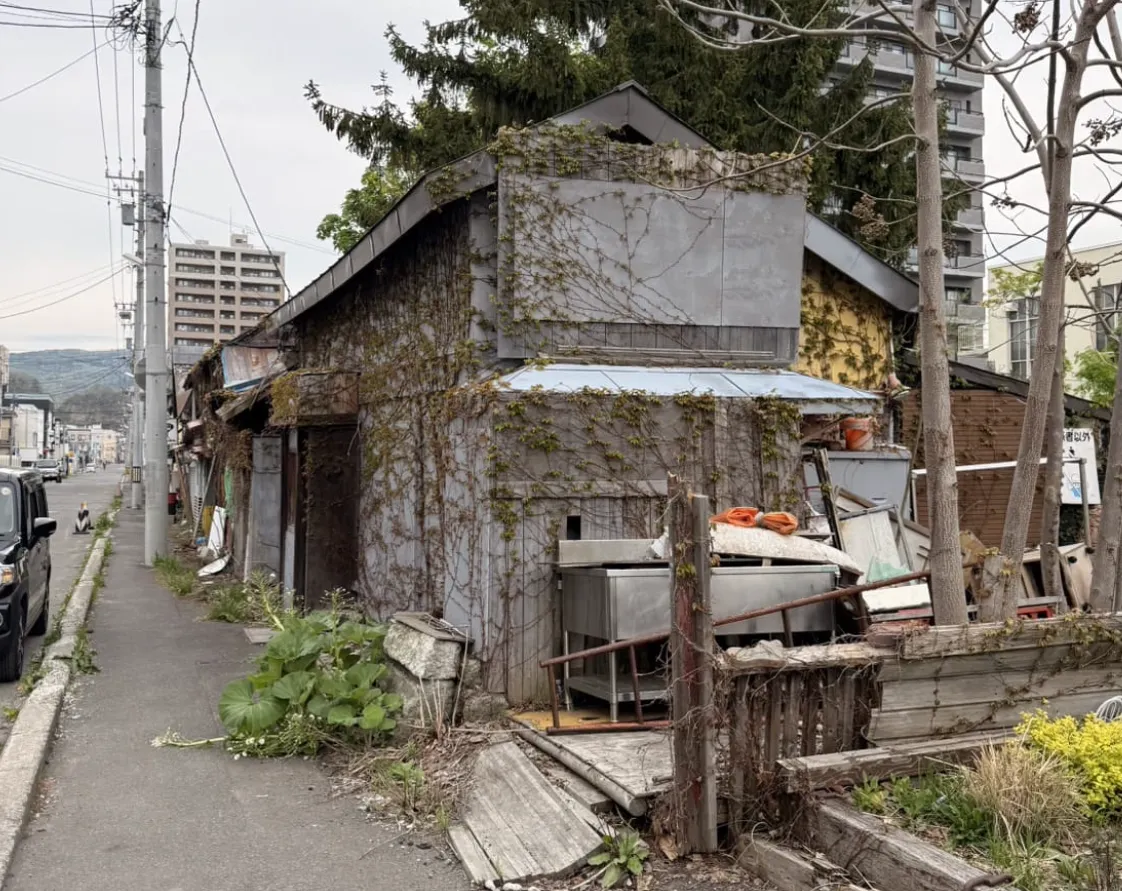
Wooden houses from the 1960s, 1970s and 1980s can absolutely still be great homes today. My own house was built in 1967. It is sturdy, well built and in great condition.
Rebuilding it from scratch today would easily cost six figures in U.S. dollars.
The myth is not really about how long these homes can physically last.
It comes from how Japan historically valued older homes.
After World War II, Japan had a massive housing shortage and needed to build as much housing as possible for a rapidly growing population and economy.
Japan eventually moved from an extreme housing shortage to having more homes than households by 1968 but the new-construction machine could not be stopped.
It still can’t be stopped to this day.
At the same time, Japan’s economy exploded.
People became richer, cities expanded and land prices ballooned.
This created what became known as the “land myth”. The widespread belief that land prices could only go up.
Land was viewed as the real asset. The house sitting on top of it was almost secondary.
Imagine buying a property for ¥15 million:
- The land is worth ¥5 million.
- The house costs ¥10 million.
Twenty-five years later, the house may be assessed as having almost no remaining value. But the land is now worth ¥40 million.
You still made an enormous profit.
So homeowners didn’t really care that the building itself was being valued at zero. Their total property was still increasing in value because the land was appreciating so quickly.
Because land prices seemed to rise continuously, banks focused heavily on land when assessing collateral.
Land was relatively easy to understand. You could look at the location, size, zoning and surrounding transactions.
The house was much more complicated.
Two wooden homes built in 1975 could be completely different.
Accurately assessing those differences takes time, documentation and physical inspection.
Japan never developed a strong system for tracking the complete history of ordinary detached homes. Maintenance records, renovation histories, original specifications, structural upgrades and inspection reports were often nonexistent.
And we still see this. We rarely get any records on a home when helping a client buy.
So instead of carefully assessing every individual home, the market took the easier route:
Estimate what it would cost to rebuild the house, then depreciate it according to its age.
For ordinary wooden homes, the assumed useful life was often around 20 years.
Japan’s Ministry of Land has openly acknowledged that older wooden homes were commonly treated as having no building value after approximately 20 to 25 years, regardless of their actual condition.
That does not mean the house physically had no value, It means the appraisal system took a shortcut.
This system was reinforced by Japan’s rapid technological and regulatory changes.
Homes built during the postwar boom could quickly appear outdated compared with newer construction. Especially when Japan implemented federal Earthquake standards.
Japan’s first federal seismic standard rule came into effect in 1981 and it immediately created a dividing line.
A pre-1981 house was not automatically dangerous, but buyers and banks had a legitimate (and easy) reason to view it differently.
Instead of asking whether an older house had been maintained, inspected or reinforced for earthquakes, which plenty were.
It was easier to just assume it wasn’t and assess it at zero.
It was conservative, fast and easy to defend, but it was also frequently inaccurate.
This is where the myth became deeply embedded.
Banks focused their appraisals on land and gave older buildings little value.
Because older buildings were not rewarded with higher appraisals, homeowners had no financial incentive to preserve detailed records of construction, maintenance and upgrades.
Because those records did not exist, banks had an even harder time identifying which older homes were actually high quality.
Because banks would not recognize much building value, buyers had difficulty obtaining financing above the land value.
Because buyers could not borrow more, older homes frequently sold near land value.
//// If you made it this far, you clearly have an interest in Japanese real estate. Download WISE. You will need it when the time comes to buy your dream home////
Those low sales then became the evidence used to justify the next low appraisal. and the next. and the next.
And on and on it went.
The system reinforced itself until “a wooden house is worth zero after 20 years” became accepted wisdom.
It was not a scientific finding about the physical lifespan of these home’s.
Japan’s property market is also significantly less transparent than many foreign buyers expect.
Japan does not have a open, consumer-facing MLS showing every listing, complete transaction history and detailed property data in the same way many Americans expect.
Records for older detached homes often don’t exist. Previous repairs may have been completed without documentation. Old plans get lost. Sellers and even home owners often know very little about work completed by earlier owners.
And when information is missing, banks understandably, take the easy route.
There is also a second number that constantly gets mixed into this conversation.
Under Japanese tax rules, a wooden residential building generally has a statutory useful life of 22 years for depreciation purposes.
But this is an accounting schedule.
It does not mean that the house becomes unsafe or needs to be demolished after 22 years.
People see the 22-year tax figure, combine it with the old 20-to-25-year appraisal convention, and conclude that Japanese houses are literally designed to last only 20 or 30 years.
They are mixing up accounting, appraisal and physical lifespan.
Those are three completely different things.
The easiest way to prove that older Japanese homes are not automatically worthless is to look at markets where demand is strong.
In places like Tokyo, Niseko, Hakuba and other desirable tourism or urban markets, older properties can absolutely increase in price.
Some of those homes are far older than 20 years and often sell for high 6 figures...
So when you hear people online say:
Every Japanese home is deliberately built to be disposable after 30 years.
You'll know better.
Japanese houses were not built with an expiration date.
The home is not disposable.
If your ready to buy a house: Book a call here
Browse opportunities yourself: Check out current listings at Nipponhomes.com
We’re always looking to partner with great travel + ski brands.
If you’d like to be featured on our perks page or partner with us, reach out here:
This content is for informational and educational purposes only and reflects my personal opinions and experience. I am not a licensed financial advisor, tax advisor, or attorney. Readers should conduct their own due diligence and consult qualified professionals before making any investment decisions.

Take the Next Step
Join our community for exclusive insights and resources on Japanese real estate investments.

Our team
Meet the founders.

Derek has been working in the Airbnb space for the past 10+ years and recently purchased a home in Japan. He is excited to bring this investment opportunity to others in the States & abroad.

Nick has a passion for adventure and has always dreamed of owning a property in Japan. His dreams finally came true when Derek brought him in on a deal of a lifetime in Hokkaido, Japan - one of Nick's favorite places on Earth.